
Why Beautiful Landing Pages and Polished Sales Pages Fail to Convert (And What Customers Actually Look For)
According to legendary advertising principles from David Ogilvy, the headline is responsible for attracting attention and convincing people to continue reading. And if people stop reading, they won't buy.
Before customers evaluate your offer, pricing, testimonials, or features — your headline determines whether they continue reading and understand your value proposition within seconds.


The Headline Costing mistake pattern I see every day across different websites
Most businesses write headlines that explain what they do. They talk about: Their platform, Their technology, Their process, Their features, their company
Customers are not visiting your page to learn about your company. They are trying to answer:
"Is This For Me?" "Can this solve my problem?" "Is this better than my current solution?" or"What makes this different?"
If your headline fails to answer those questions, your visitors leave before they discover your offer. Discover common headline mistake patterns below and how to fix them
Hero Section Analysis: Even Great Copy Can Be Improved
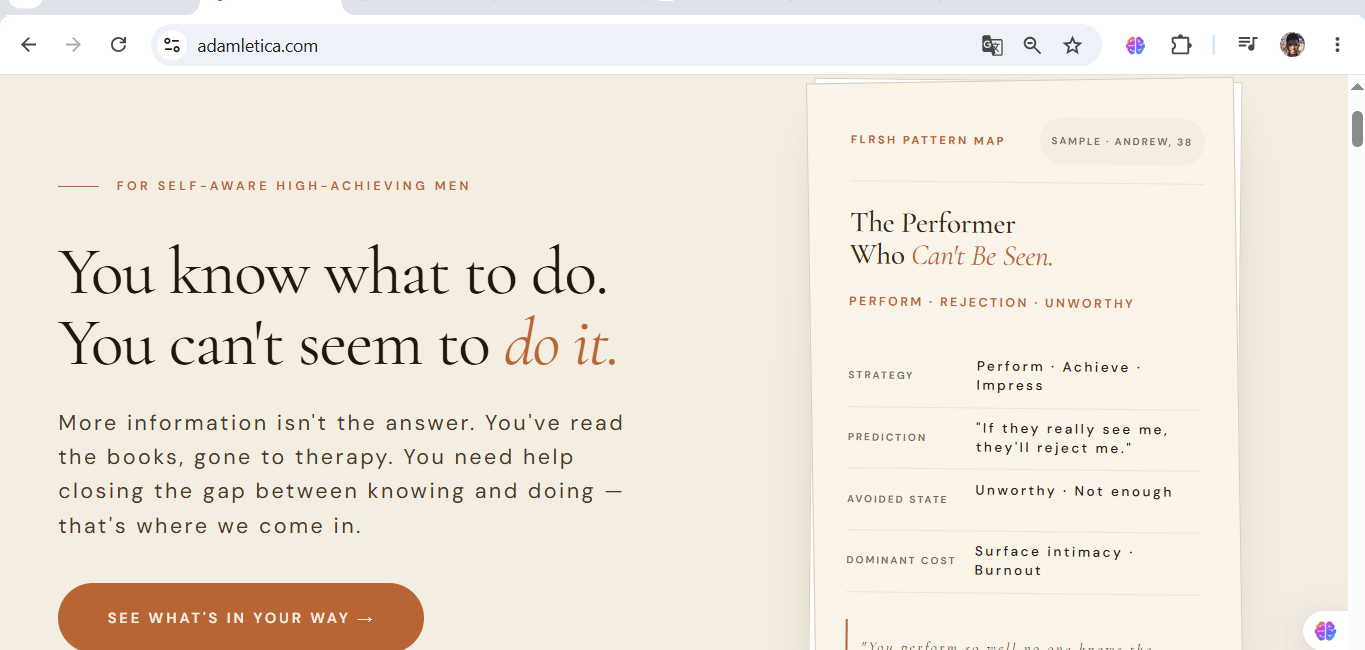
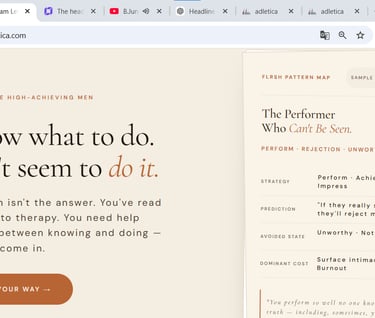
This following hero section is actually much stronger than the generic AI-generated landing pages we usually see. However, the conversion potential could still be increased.The current hero section is already a great example because it starts from the customer's problem, not the company's offer. This is proof that even a well-written hero section that already connects with the audience can be improved further.
What This Hero Section Does Well
1. It Identifies the Audience Immediately
"For self-aware high-achieving men"
This instantly qualifies the right audience.
The visitor thinks:
"This is for someone like me."
Instead of trying to speak to everyone, it speaks directly to a specific person.
"You know what to do. You can't seem to do it."
This is the strongest part of the hero.
It identifies the real struggle: they are not missing information — they are struggling to turn knowledge into action.
Knowing what to do → Actually doing it
That emotional recognition is powerful because people connect with messages that make them feel understood.
"More information isn't the answer. You've read the books, gone to therapy."
This is smart positioning.
It tells the visitor:
"You don't need more information. You need help executing."
It separates the offer from solutions they have already tried.
2. It Captures the Internal Problem
3. It Handles a Major Objection
The Opportunity To Improve Conversion
The headline is emotionally accurate and does a great job identifying the problem. This hero already understands the customer better than most pages.
The opportunity is to make the transformation more concrete.
Instead of only helping visitors recognize their struggle, the hero should also help them visualize:
What changes after they close the knowing-doing gap?
What results can they expect?
Who do they become after the transformation?
The goal is to move from:
"You understand my problem."
to:
"This is the transformation I've been looking for." However, the desired outcome is slightly hidden. The visitor understands:
"I know what to do, but I can't execute."
But they may still ask:
"Okay, what exactly happens after I close that gap?" and that's what they are looking for
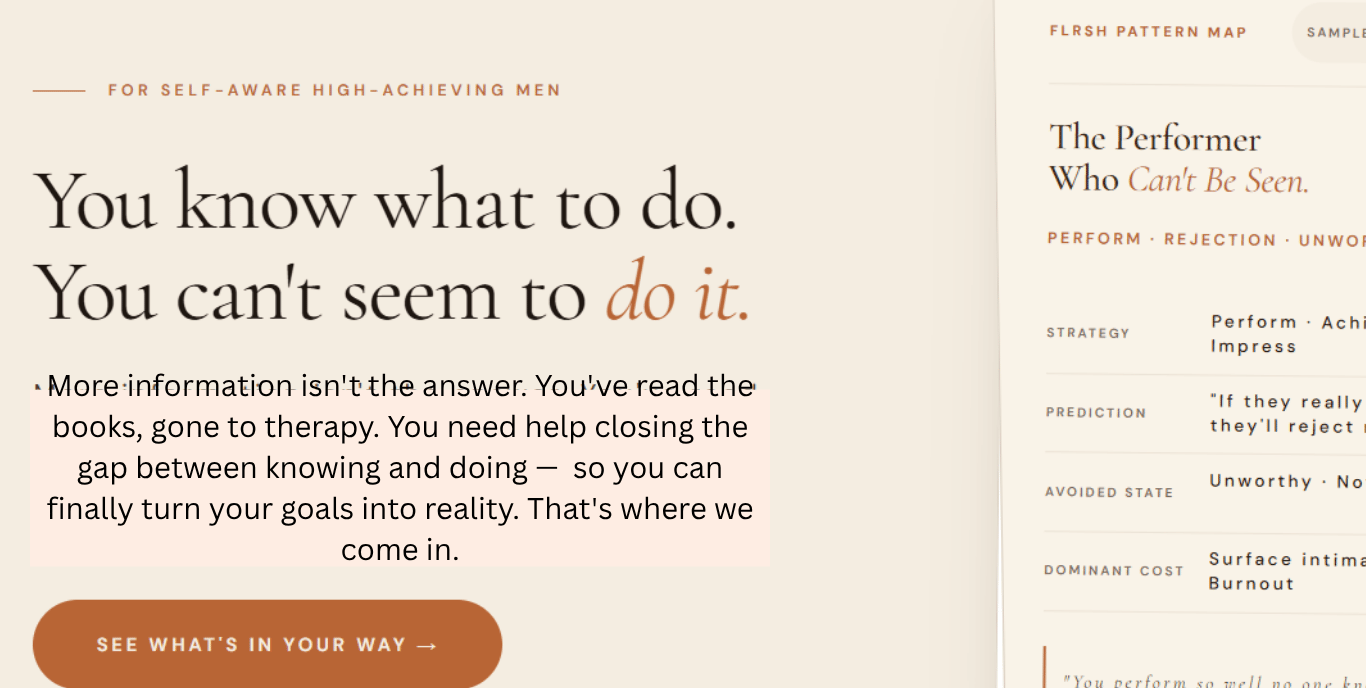
The hero clearly explains the struggle, but it should also communicate the result more strongly.
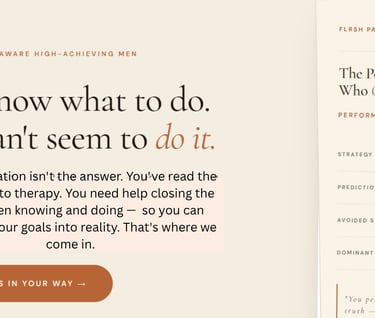
People don't only want to understand their problem. They want to see the future they want to achieve. The following version may show that better
WorkWithMarco
Revenue-backed copy and conversion diagnostics.
Home-The Framework-Contact
START THE DIAGNOSTIC
marcoibrahim@persuadewithwords.com
Consultations by application only
Austin, Texas
© 2026 WorkWithMarco-Direct response copywriting and conversion diagnostics.
QUANTIFIABLE LIFT